

Short answer: To do keyword research, list the topics your customers care about, expand them into real search phrases with Google suggestions, Search Console and a keyword tool, then check each phrase’s search intent by looking at what already ranks. Score the shortlist on relevance, demand, difficulty and business value, group close variants into one page each, and map every group to a single URL before you write.
This guide is for business owners, bloggers and new SEOs who want a repeatable keyword research process that works without an expensive tool subscription. By the end you will have a scored keyword list, grouped into pages, with a clear idea of which page to build or improve first.
What keyword research is (and what it is not)
Keyword research is finding the words people actually type when they need what you offer, and deciding which of those searches your site should answer, with which page. It is not collecting the highest-volume phrases you can find. A phrase is only worth targeting if the people searching it want something you can give them, and if a page from your site has a realistic chance of ranking.
Google’s own SEO Starter Guide puts it simply: think about the words a user might search for to find your content, and write with readers in mind. It also says not to worry about catching every variation, because Google’s language systems connect related queries. That is why modern keyword research is about topics and intent, not single exact phrases.
The cost of skipping it is real. In Ahrefs’ 2023 study, 96.55% of pages got no traffic from Google, and the reasons it gave were no search demand, no backlinks and a mismatch with search intent. Good research addresses the first and third directly.
Step 1: List your seed topics
Seed topics are the broad subjects your business covers. Write down your services or product categories, the problems customers describe to you, and the questions your sales or support team hear every week. For a dental clinic in Karachi that might be “teeth whitening”, “braces”, “root canal” and “dentist near me”. For an online shop it is your categories.
Talk to customers or read their emails and WhatsApp messages. The words they use are often different from the words you use. A clinic says “orthodontic treatment”; patients search “braces price in Karachi”.
Rather have an expert do this for you?
Hand it over and get back to running your business.
Step 2: Expand seeds into real search phrases
Google itself
Type each seed into Google and note the autocomplete suggestions, the “People also ask” questions and the related searches at the bottom of the page. These come from real search behaviour.
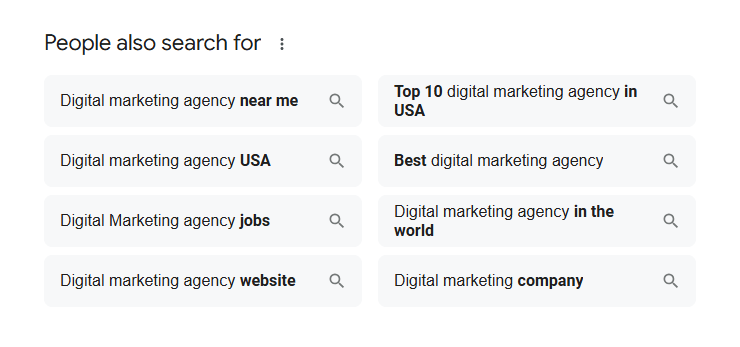
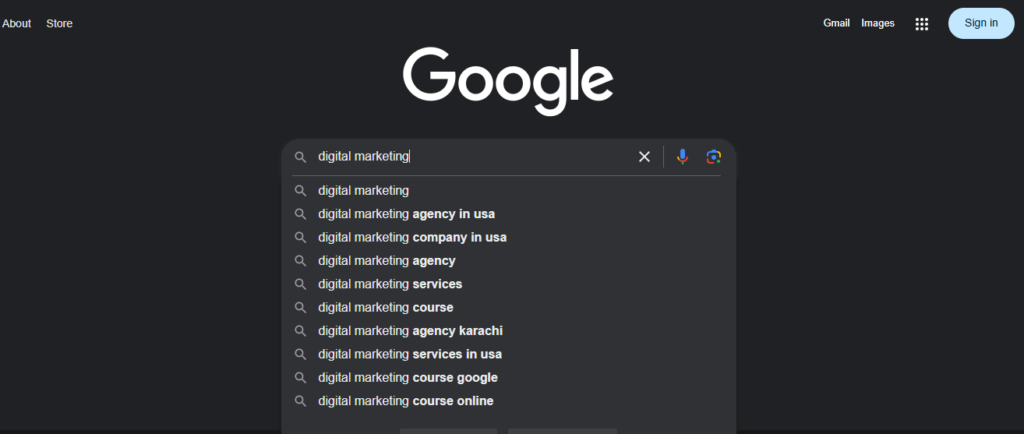
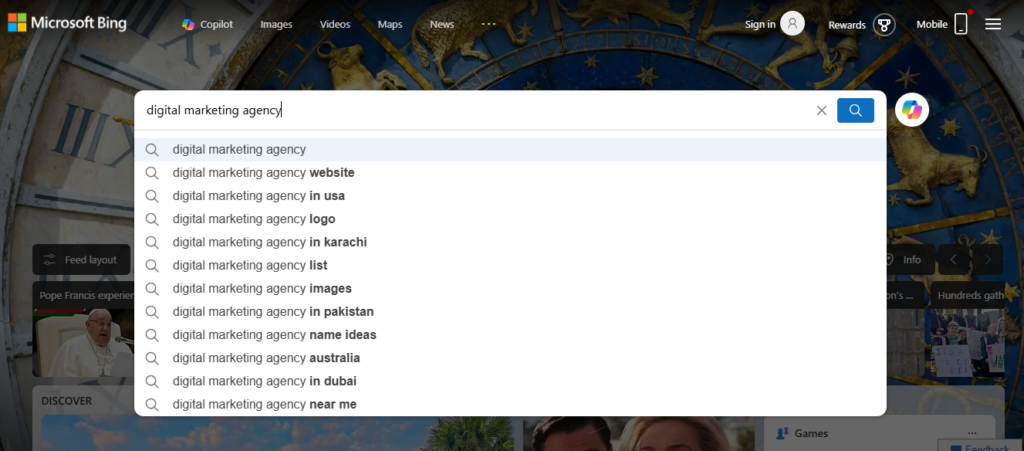
Repeat the same on Bing and YouTube. Suggestions differ by platform, and YouTube is useful for “how to” topics.
Google Search Console (if your site is live)
This is the most underused source. The Performance report shows the queries you already appear for, including long phrases no tool lists. Filter for queries where your average position is between 8 and 20; these are striking-distance keywords that often need only a better page section to move up. Because Google says around 15% of daily queries are new, Search Console regularly surfaces phrases that are not in any keyword database.
Keyword tools
- Google Keyword Planner: estimates monthly searches. It sits inside Google Ads and needs billing details to set up the account, and very low-volume keywords are not shown.
- Google Trends: shows relative interest on a 0 to 100 scale. Use it to compare phrases (“mobile phone” vs “smartphone”) and spot seasonality, such as interest in “Eid dresses” or “air cooler” rising each year.
- Paid tools (Semrush, Ahrefs, Mangools KWFinder): volume estimates, keyword difficulty scores and competitor keyword lists. Worth it once you have a site to grow.
- Free extras: AnswerThePublic for question phrases and Keywords Everywhere for quick volume checks in the browser.
Competitors, forums and Wikipedia
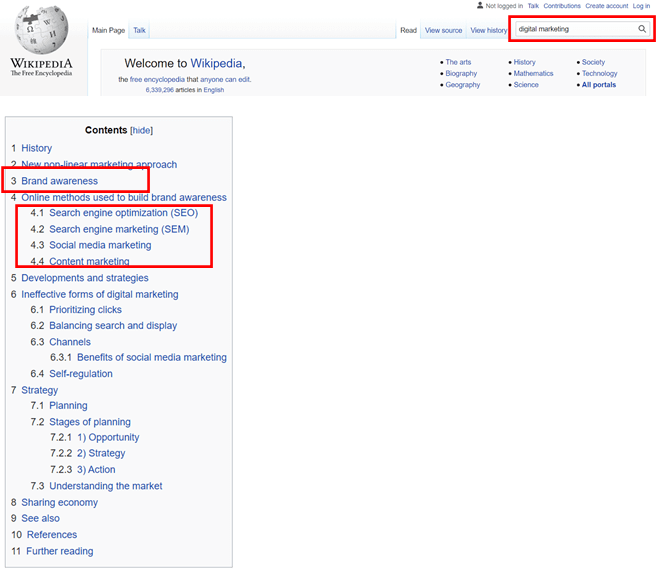
Look at the pages that rank for your seeds and note the subtopics they cover. Read forums, Reddit threads and Facebook groups where your customers ask questions. A Wikipedia article’s table of contents is a quick way to see the subtopics of a broad subject.
Using AI assistants
ChatGPT, Gemini and similar tools are good at brainstorming angles, questions and synonyms from a seed. They do not have search volume data, so treat their output as ideas and verify each phrase in Google and Search Console before you use it.
Step 3: Check the search intent of every keyword
Search the keyword yourself, in a private window and with your location set to where your customers are, and look at what ranks. The results page tells you what Google thinks searchers want. My guide to search intent goes deeper; this table is the quick version.
| Intent | Example query | What usually ranks | Page you need |
|---|---|---|---|
| Informational | how to remove tea stains from teeth | Guides, videos, “People also ask” | A blog post or guide |
| Commercial investigation | best laptop for students under 150000 | Comparisons, reviews, lists | A comparison or buying guide |
| Transactional | buy hp laptop online pakistan | Category and product pages, shopping ads | A category or product page |
| Local | dentist in gulshan e iqbal | Map pack, local service pages, directories | A Google Business Profile plus a service or location page |
| Navigational | daraz login | The brand’s own site | Not worth targeting unless it is your brand |
If the top results are all a different page type from the one you planned, change the plan, not the keyword. A service page will struggle on a query where Google shows only guides.
Step 4: Evaluate volume, difficulty and value
Search volume
Volume figures are estimates, and different tools disagree. Use them to compare phrases against each other, not as promises of traffic. In smaller markets, including most of Pakistan, many valuable phrases show “0 to 10” searches a month in tools yet still bring enquiries. Do not discard a phrase only because a tool says the volume is low.
Keyword difficulty
Difficulty scores (0 to 100) are each tool’s estimate based mostly on backlinks to the top-ranking pages. Check the results yourself too: if the first page is full of forums, thin pages or small local sites, there is room. If it is all national brands and government sites, pick a narrower phrase first.
Head, middle and long-tail keywords
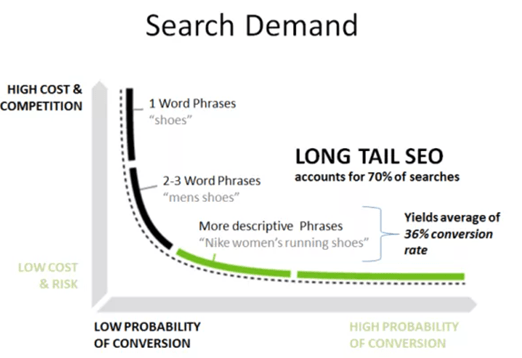
Head terms (“laptops”) are short, broad and competitive. Long-tail phrases (“hp laptop 16gb ram price in lahore”) are longer and more specific, with lower volume and clearer intent. New sites usually win faster on long-tail keywords and grow into head terms later.
Click potential
Some results pages answer the question before anyone clicks: a calculator, a definition box, an AI Overview, or several ads. Note these. A keyword with lower volume but a plain list of organic results can bring more visits than a bigger one where clicks are scarce. See my notes on zero-click searches.
Score your shortlist
I score each candidate on four factors from 1 to 5. Enter your scores to get a priority figure out of 100.
Keyword priority score
How it works: relevance and business value carry more weight (3 each) than demand and ease (2 each), because a perfect-fit keyword with modest volume usually beats a popular one that does not convert. The weights are my working method, not an industry standard; adjust them if your goals differ.
Step 5: Group keywords and map them to pages
Close variants with the same intent belong on one page. “SEO consultant Karachi”, “SEO expert in Karachi” and “Karachi SEO specialist” are one page, not three. A quick test: search two phrases; if the top results largely overlap, they belong together. Then assign each group to one URL in a sheet with these columns: keyword group, main keyword, intent, existing or new URL, page type and priority.
This is keyword mapping, and it is what stops keyword cannibalisation before it starts. Groups that sit under one broad theme become a topic cluster: a main page plus supporting articles, linked together.
Worked example: a Lahore furniture shop
Seeds: “sofa”, “dining table”, “bed”. Expansion through Google suggestions and Search Console gives phrases such as “sofa set price in lahore”, “l shaped sofa design”, “6 seater dining table”, “wooden double bed design” and “how to clean fabric sofa”. Intent checks show the price and design phrases return shop category pages and image-heavy listings, so they map to category pages; “how to clean fabric sofa” returns guides, so it becomes a blog post that links to the sofa category. “Sofa set price in lahore” and “sofa price lahore” share most results, so they become one page. Scoring puts the sofa category first (high relevance and value, clear local demand), the dining category second, and the cleaning guide third as supporting content.
Step 6: Put the research to work and review it
- Use the main keyword in the title tag, H1 and opening paragraph where it reads naturally; cover the rest of the group through subheadings and examples. My title tag guide covers the details.
- Answer the questions you collected inside the page, and link related pages to each other.
- Track impressions, clicks and position for each group in Search Console, not just one phrase.
- Repeat the research every quarter, and whenever you add a product line or service.
Common mistakes I find in audits
- Choosing keywords by volume alone, then writing a page type that does not match the intent.
- Building separate pages for spelling variants or tiny wording differences.
- Ignoring how the local market actually searches, including Roman Urdu phrases and local terms such as “mistri” or “price in Pakistan”.
- Never opening Search Console, which is free and shows real queries.
- Treating tool difficulty scores as fact instead of checking the results page.
Frequently asked questions
How do I do keyword research for free?
Use Google autocomplete, “People also ask” and related searches for ideas, Google Search Console for the queries you already appear for, Google Trends to compare phrases, and Keyword Planner for rough volumes. That combination is enough for most small businesses.
How many keywords should I target per page?
One main keyword and its close variants, all with the same intent. A page can rank for hundreds of related phrases, but it should have one clear job.
What is a good search volume for a keyword?
There is no universal figure. In a niche or local market, a phrase with 20 searches a month from buyers can be worth more than one with 5,000 from researchers. Compare relevance and value, not just volume.
Are low-volume keywords worth targeting?
Often, yes. Tools under-report long and local phrases, and they usually carry clearer intent. A page built around a group of low-volume phrases can bring steady, well-qualified traffic.
How long does it take to rank for a new keyword?
It depends on competition and your site’s authority. Long-tail phrases on an established site can move within weeks; competitive head terms on a new site often take many months. Most sites see movement within 3 to 6 months of consistent work.
How often should I redo keyword research?
Review Search Console monthly and refresh your full keyword map every quarter or when your offer changes.
Sources
- Ahrefs, “96.55% of content gets no traffic from Google” (2023).
- Search Engine Journal, “Google revisits 15% unseen queries statistic in context of AI search” (2025).
- Google Trends Help, “FAQ about Google Trends data”.
- Google Search Central, “SEO Starter Guide” (last updated 2025).
Once your keyword map is ready, the next step is building pages that match it; my on-page optimisation service covers that, and you can ask me for a review of your keyword list.
Request received
Thank you! Saad will contact you within the next 24 hours.
Keep an eye on your phone and inbox.