
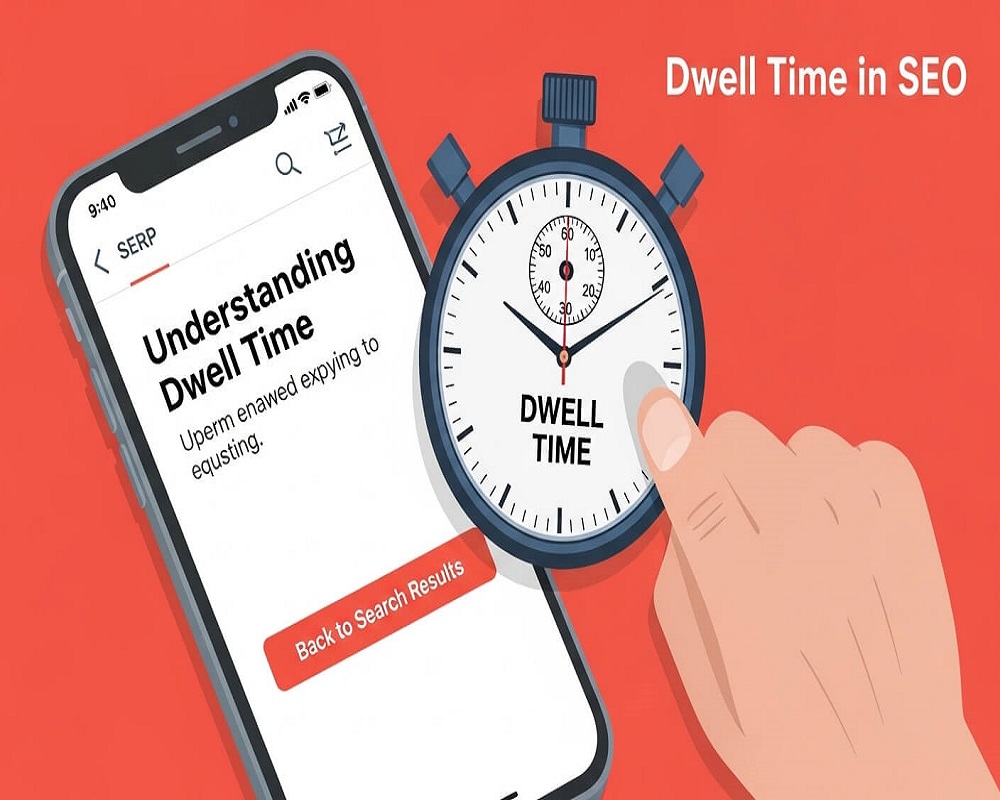
Short answer: Dwell time is the time between a searcher clicking your result and returning to the search results. Google has never confirmed it as a ranking factor and you cannot see it in any tool, but Google does say it uses aggregated interaction data to judge relevance. Treat it as a symptom: if people quickly go back to search, the page did not answer them. Improve it by matching intent, answering early and making the page easy to use.
This guide is for content writers, site owners and SEOs who have read that “dwell time is a ranking factor” and want to know what is actually true, how to estimate it from the data you do have, and what changes keep searchers on a page. No myths, no promised ranking boosts: just what the evidence supports and what I do on audits.
What is dwell time?
Dwell time is the length of time between a person clicking a search result and coming back to the same results page. If someone searches “how to reset a router”, clicks your article, reads for three minutes and then returns to search, the dwell time was three minutes. If they come back after four seconds and click a different result, that short visit followed by another click is often called pogo-sticking.
The term was popularised by Bing. A 2011 post on the Bing Webmaster Blog described the time between a click and the return to results as telling “a potential story”, said “a minute or two is good” while “less than a couple of seconds” can be a poor result, and called it “a signal we watch” among others.
Dwell time vs similar metrics
| Metric | What it measures | Who can see it |
|---|---|---|
| Dwell time | Time from a search click until the user returns to the results page | Only the search engine |
| Pogo-sticking | Quickly returning to results and clicking another result | Only the search engine |
| Average engagement time (GA4) | Time the page was in focus in the browser, across all traffic sources | You, in Google Analytics |
| Bounce rate (GA4) | Share of sessions that were not engaged | You, in Google Analytics |
| Click-through rate | Share of impressions that became clicks | You, in Search Console |
The key point: you cannot measure dwell time directly. Analytics tools do not know when someone returned to Google. See my guides to bounce rate and CTR for the metrics you can see.
Is dwell time a Google ranking factor?
Google has not confirmed dwell time as a ranking factor. What Google does say, on its How Search Works site, is this: “We also use aggregated and anonymized interaction data to assess whether search results are relevant to queries”, and it turns that data into signals for its machine-learned systems.
So the honest position is:
- Google uses interaction data in aggregate to judge whether results satisfy searchers.
- It has not said that your page’s dwell time is a ranking factor, or that a longer visit ranks better.
- A raw time measure would be a poor signal on its own: a searcher who gets a phone number in eight seconds is satisfied, not disappointed.
That is why I never chase dwell time as a number. I use it as a way of thinking: did this page give the searcher what they came for, quickly and well? If yes, whatever interaction signals Google uses will tend to look healthy. If no, no trick will fix it. My overview of Google ranking factors covers what Google has actually confirmed.
Rather have an expert do this for you?
Hand it over and get back to running your business.
How to estimate dwell time with the data you have
Because dwell time is invisible, I build a proxy from four sources for organic landing pages:
- GA4 average engagement time, organic only. In Reports, open Pages and screens or Landing page, add a comparison for Session default channel group equals Organic Search, and sort by views. My Google Analytics for SEO guide shows the setup.
- GA4 engagement rate. Google defines an engaged session as one lasting longer than 10 seconds, having a key event, or having 2 or more page views (Google Analytics Help). A low organic engagement rate means many visitors left within 10 seconds without doing anything.
- Search Console. Pages with good positions but falling clicks, or with many queries that do not match the content, often have intent problems that also show up as short visits.
- Session recordings and scroll maps (Microsoft Clarity is free) for your most important pages: watch where people stop.
Engagement time calculator
This compares how long people actually spend with how long the page would take to read. It does not measure dwell time, but it shows whether visitors are reading or leaving early. Take average engagement time from GA4 for organic visits.
Read-through estimate
How to read it: these bands are my own rule of thumb from audits, not Google figures. Reading speed varies by reader and language, so 200 words per minute is only a starting assumption. A quick-answer page can be “low” and still fully satisfy searchers.
How to improve dwell time
Everything below is about satisfying the searcher, which is the only reliable way to influence engagement. Research summarised by Nielsen Norman Group found users often leave pages within 10 to 20 seconds, and that the chance of leaving levels off after about 30 seconds, so the opening of the page carries most of the weight.
1. Match the search intent exactly
The biggest cause of short visits I find is a mismatch: a sales page ranking for an informational query, or a long essay for a query that wants a quick number. Search your main query and compare the format of the top results with yours. My guide to search intent explains how.
2. Answer in the first screen
Put the direct answer or the key information in the first few lines, then expand. Long scene-setting introductions push the answer below the fold and send people back to search.
3. Make the title and snippet honest
A misleading title gets the click and then loses the visitor. Promise exactly what the page delivers. See writing meta descriptions.
4. Make the page easy to scan
Clear headings, short paragraphs, tables for comparisons, and a contents list on long pages. Use header tags that describe each section so people can jump.
5. Load fast and stay stable
Slow loading and shifting layouts lose visitors before they read a word, especially on mobile data. Check your Core Web Vitals.
6. Remove what gets in the way
Pop-ups on arrival, cookie banners covering the content, autoplay video and heavy ads above the answer all push people back to search.
7. Give a useful next step
Link to the natural follow-up question with descriptive anchors, add a relevant tool or example, and keep the page current. Internal links that answer the next question keep people on your site rather than back on Google.
Worked example: a price page that lost visitors in seconds
A pattern I see on Pakistani service sites: a page ranking for “solar panel price in Pakistan” that opens with three paragraphs about the company’s history and the benefits of solar energy, with prices hidden in a PDF. Organic engagement rate is low and the page slips after a few months.
The fix I recommend: a short answer at the top with a price table by system size (with a “last updated” date and what the price includes), a note on what changes the price, then the explanation and a WhatsApp enquiry button. Searchers get the number they came for, then have a reason to read further or get in touch.
Dwell time myths I still see
- “Longer content means higher dwell time means higher rankings.” Padding makes the answer harder to find and can shorten visits.
- “Lower your bounce rate to rank.” GA4 bounce rate is not dwell time. It measures sessions on your site from every source, not what searchers did on Google.
- “There is a target dwell time.” No source supports a universal number. A satisfied visit for a phone number lasts seconds.
- “Tricks like hidden content or forced scrolling help.” They annoy readers and do nothing for satisfaction.
Frequently asked questions
Is dwell time the same as time on page?
No. Dwell time only covers visits from a search results page and ends when the user returns to those results; only the search engine can see it. Time on page, or GA4 average engagement time, covers all visitors and is measured by your analytics.
What is a good dwell time for SEO?
There is no official benchmark. Bing’s 2011 guidance described a minute or two as good and a couple of seconds as poor, but the right length depends on the query. Judge it by whether visitors get what they came for, not by a number.
Does Google use dwell time for ranking?
Google has not confirmed it. It does say it uses aggregated and anonymised interaction data to assess whether results are relevant. Focus on satisfying searchers rather than on dwell time itself.
How can I measure dwell time?
You cannot measure it directly. Use organic-only average engagement time and engagement rate in GA4, Search Console query data, and session recordings as proxies.
What is the difference between dwell time and pogo-sticking?
Dwell time is how long the visit lasted before returning to the results. Pogo-sticking is the pattern of returning quickly and clicking a different result, which suggests the first page did not satisfy the searcher.
Sources
- Google, “How Search Works: Ranking results” (accessed 2026).
- Bing Webmaster Blog, “How to build quality content” (2011).
- Nielsen Norman Group, “How long do users stay on web pages?” by Jakob Nielsen (2011), summarising Liu, White and Dumais, Microsoft Research (2010).
- Google Analytics Help, “Engagement rate and bounce rate” (accessed 2026).
If your pages rank but visitors do not stay, my on-page optimisation service looks at intent, structure and speed page by page, or you can send me a page you are worried about.
Request received
Thank you! Saad will contact you within the next 24 hours.
Keep an eye on your phone and inbox.