
Short answer: Koraynese is the informal name for Koray Tuğberk Gübür’s semantic SEO framework and the precise, entity-focused writing style that goes with it. You define what your site is for (source context) and its main subject (central entity), plan every related question in a topical map, then write clear, factual pages in a logical order and link them by context, so search engines see the site as a complete, trustworthy source.
This guide is for SEOs and content writers who keep seeing “Koray’s framework”, “topical map” and “Koraynese” mentioned and want a plain explanation they can act on. You will learn the core terms in normal English, see a worked topical map, get writing rules you can apply to your next page, and understand the costs and criticisms, so you can decide how much of the method your site actually needs. I use a lighter version of it on most client projects, and I will show where I simplify.
What is Koraynese?
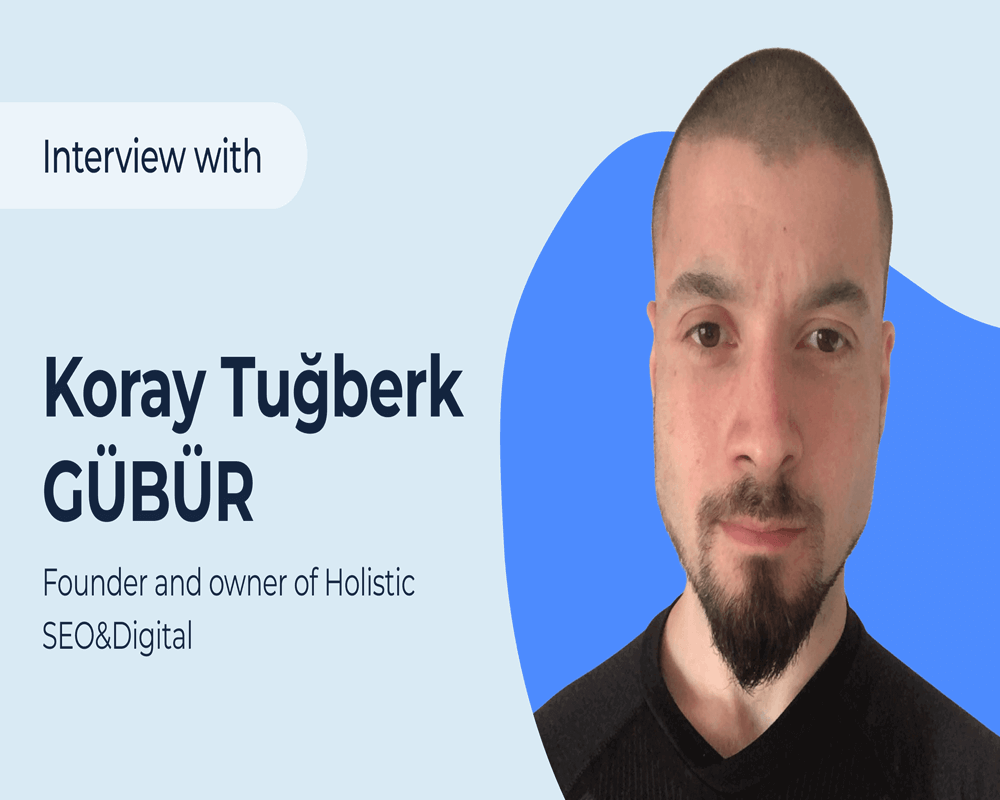
Koray’s Framework is a way of planning and writing a website so search engines see it as the most complete, trustworthy source on a topic. It was developed by Koray Tuğberk Gübür, founder of the agency Holistic SEO & Digital, and rests on three ideas: semantic SEO, holistic SEO and topical authority. People in the SEO community nicknamed the precise, entity-heavy writing style it produces “Koraynese”.
The framework treats a website as a connected body of knowledge rather than a set of pages chasing keywords. Instead of asking “which keyword should this page target?”, it asks “which questions, entities and attributes belong to this topic, and in what order should a reader meet them?”
Who is Koray Tuğberk Gübür?
Koray Tuğberk Gübür is a Turkish SEO practitioner and the founder of Holistic SEO & Digital. He is known for publishing detailed case studies on topical authority, for his work on how search engines process language and entities, and for his long-form courses on semantic SEO. His ideas are widely discussed, sometimes debated, and have shaped how many SEOs plan content.
The key terms in plain English
Much of the confusion around Koraynese comes from vocabulary. These are the terms you will meet most, with how I explain them to clients.
| Term | Plain meaning | Example: a solar installer in Lahore |
|---|---|---|
| Source context | What the site is for and how it makes money | Selling and installing home solar systems |
| Central entity | The main thing every section of the site connects back to | Solar panel systems |
| Central search intent | Source context and central entity combined: what the site should be the answer for | Choosing and installing solar for a home |
| Attributes | Properties of the entity people ask about | Cost, size, inverter type, net metering, lifespan |
| Topical map | The planned list of every page, grouped and ordered | Services, costs, system types, guides, comparisons |
| Core section | Pages about the main attributes tied to what you sell | Installation, system packages, pricing |
| Outer section | Supporting pages on minor attributes that build trust and feed the core | How net metering works, cleaning panels |
| Macro context | The single main topic of one page | “How much does a 5 kW system cost?” |
| Micro context | Supporting subtopics within that page | Battery vs no battery, installation charges |
| Contextual bridge | A link or passage that connects two related pages naturally | Cost page linking to the net metering guide |
Rather have an expert do this for you?
Hand it over and get back to running your business.
Pillar 1: Semantic SEO
Semantic SEO is the core of the framework. The goal is to understand what a searcher means and what they will ask next, then answer in that order. Google’s own ranking systems guide describes systems that match concepts rather than exact words and judge individual passages, which is why this style of writing works.
- Search intent: decide whether the query is informational, commercial, transactional or navigational, and match the page type to it. See my guide to search intent.
- Entities and attributes: name the people, places, products and concepts involved, and describe their properties and relationships. For “electric cars”, that means battery capacity, range, charging speed, models and manufacturers. My guide to entity-based SEO goes deeper.
- Precise language: short, factual sentences that state one thing clearly. This is the heart of Koraynese: answers that are easy for both people and machines to extract.
- Question order: arrange headings the way questions naturally follow on, from definition to causes, types, steps and comparisons.
- Related terms: cover the vocabulary an expert would use. You will see this called “LSI keywords”, but Google does not use Latent Semantic Indexing; the point is simply complete, natural coverage.
Pillar 2: Holistic SEO
Holistic SEO means no single area is neglected. Great content on a slow, badly structured site will underperform, and so will a fast site with thin content.
- Technical SEO: crawlable, indexable pages, clean URLs, fast loading and good Core Web Vitals (LCP, INP and CLS; INP replaced FID in March 2024), plus valid structured data.
- On-page SEO: clear titles, headings, meta tags and internal links.
- Off-page signals: relevant links and brand mentions.
- Content quality: accurate, original and written from experience.
Pillar 3: Topical authority
Topical authority is earned when a site covers a subject in depth and breadth, with pages linked in a logical way. The method uses a topical map: a planned list of every subtopic, grouped into a core section and an outer section, with a defined order for publishing and linking.
- Depth: each important subtopic has its own page that genuinely answers it.
- Breadth: the site covers the whole subject, not just the high-volume keywords.
- Contextual internal links: links connect pages where the context truly overlaps, with descriptive anchor text.
- Publishing momentum: steady publishing of related content helps search engines see the site as active in that topic.
A small topical map example
Here is a simplified topical map for a local plumbing company. The core section covers what the business sells; the outer section answers supporting questions that build authority and feed links into the core pages.
| Section | Page | Main intent | Links to |
|---|---|---|---|
| Core | Emergency plumbing service | Transactional | Leak repair, blocked drains |
| Core | Leak detection and repair | Transactional | Emergency service, water pressure guide |
| Core | Blocked drain clearing | Transactional | Emergency service, drain care guide |
| Outer | How to find a hidden water leak | Informational | Leak detection and repair |
| Outer | Why is my water pressure low? | Informational | Leak detection and repair |
| Outer | How to prevent blocked drains | Informational | Blocked drain clearing |
Each outer page answers a real question fully, then links to the service that solves the problem. A full map for a competitive niche can have hundreds of rows, but even a map this small makes the site’s purpose clearer than a handful of unrelated blog posts. For the step-by-step process, see my guide to topic clustering.
Writing in Koraynese: rules you can apply today
You do not need to adopt the whole framework to benefit from its writing discipline. These are the rules I apply to almost every page, in my own words:
- Answer first. Put the direct answer to the heading’s question in the first sentence below it.
- One main topic per page. Everything else on the page supports that macro context.
- Use the question as the heading where it reads naturally.
- State facts plainly. “A 5 kW system built from 500 W panels needs 10 panels” beats “Many factors can affect how many panels you might need”.
- Name the entity, do not hide it behind “it”. Especially at the start of sections, which may be read on their own.
- Keep related attributes together and in a logical order.
- Link where the context genuinely overlaps, with anchor text that describes the destination.
- Cut filler. If a sentence adds no fact, example or step, remove it.
Worked example: rewriting a paragraph in Koraynese
Before: “When it comes to solar energy, there are lots of things homeowners in Pakistan need to think about, and cost is certainly one of the most important factors that people tend to consider before making a decision.”
After: “A home solar system in Pakistan costs more with batteries than without. The main cost drivers are system size in kilowatts, panel type, inverter type and whether batteries are included. Net metering lets on-grid systems sell surplus power back to the grid, which shortens the payback period.”
The rewrite names the entity, lists its attributes and states relationships, all in fewer words. (The figures in your own page should come from current local quotes.)
Why the framework fits how Google works now
Google’s direction since 2023 supports it. The helpful content system became part of Google’s core ranking systems in March 2024, so quality is judged continuously. Google’s spam policies target scaled content abuse, which punishes sites that churn out many thin pages. And AI answers are now common: Pew Research Center’s 2025 survey found 65% of US adults at least sometimes come across AI summaries in search results. Clear passages within a well-covered topic are what those summaries draw on, which I cover in optimising content for AI Overviews.
Criticisms and when to simplify
- Cost: a full topical map can mean hundreds of pages. Most small businesses should build the core section properly first and add outer pages over time.
- Jargon: the vocabulary is dense and can turn into a box-ticking exercise. The terms are tools for thinking, not goals.
- Risk of thin pages: covering every attribute with its own page can produce many weak pages, the opposite of the intent. Merge small subtopics into stronger pages.
- Not a substitute for experience: perfect structure does not replace real knowledge, original examples and trust signals.
Check your understanding
In Koray’s framework, what is the “source context”?
- The website a link comes from
- What the site is for and how it makes money
- The original source of a quoted statistic
Source context is the purpose and business model of the site. It decides which attributes belong in the core section.
Which page belongs in the outer section for a plumbing company?
- Emergency plumbing service
- Leak detection and repair
- Why is my water pressure low?
The water pressure guide answers a supporting question and links to the core service page that solves it.
Which sentence is closest to Koraynese?
- “A 5 kW solar system built from 500 W panels needs 10 panels.”
- “There are many things to consider when thinking about solar.”
- “Solar is the best choice for every homeowner, full stop.”
It names the entity, an attribute and a value in one plain, factual sentence.
Does Google use “LSI keywords”?
- Yes, it is a core ranking factor
- No, the useful idea is simply complete, natural coverage of related terms
- Only for local searches
Latent Semantic Indexing is an old information retrieval technique. Covering the vocabulary an expert would use is good writing, not an LSI trick.
How to apply the framework to your site
- Audit what you have. Use Search Console, GA4 and a crawler to list your pages, the queries they appear for and technical problems. An SEO audit at this stage stops you building on a weak base.
- Define source context and central entity. Write them down in one sentence each.
- Build the topical map. List every attribute and question, split them into core and outer sections, and mark which pages already exist.
- Rewrite core pages first using the writing rules above.
- Fix the technical side: speed, mobile usability, broken links, and Article, Organization or Product structured data validated in the Rich Results Test.
- Publish outer pages in order and link each to its parent and siblings.
- Measure. Rising impressions across a cluster in Search Console usually come before ranking gains.
Frequently asked questions
What does “Koraynese” mean?
It is an informal nickname for Koray Tuğberk Gübür’s style of writing and SEO: precise, entity-focused sentences built around a planned topical map.
Is Koray’s Framework only for large sites?
No. Small sites can apply it by mapping one core topic properly and covering it well before expanding. The principles scale down; the page count does not have to be huge.
Does Koray’s Framework still work with AI Overviews?
Yes, arguably better. AI answers favour clear, well-structured passages from sites that cover a topic in depth, which is what the framework produces.
How long before topical authority shows results?
It varies with competition and how much you publish. Many sites see impressions rise across a cluster within a few months, with rankings following later.
Do backlinks still matter in this framework?
Yes. The framework emphasises topical coverage, but links and brand signals remain part of holistic SEO. Strong coverage simply means each link works harder.
What is the difference between a topical map and a content calendar?
A topical map decides what the site must cover and how pages connect. A content calendar only decides when things get published. Build the map first, then schedule from it.
Sources
- Google Search Central, “A guide to Google Search ranking systems” (updated 2025).
- Pew Research Center, “Americans have mixed feelings about AI summaries in search results” (2025).
- Google Search Central, “Spam policies for Google web search” (updated 2026).
- Holistic SEO & Digital, Koray Tuğberk Gübür’s agency site (accessed 2026).
If you want a topical map built around what your business actually sells, my on-page optimisation service includes mapping and rewriting core pages, or you can get in touch with a question first.
Request received
Thank you! Saad will contact you within the next 24 hours.
Keep an eye on your phone and inbox.