
Introduction: The Architecture of the Semantic Web
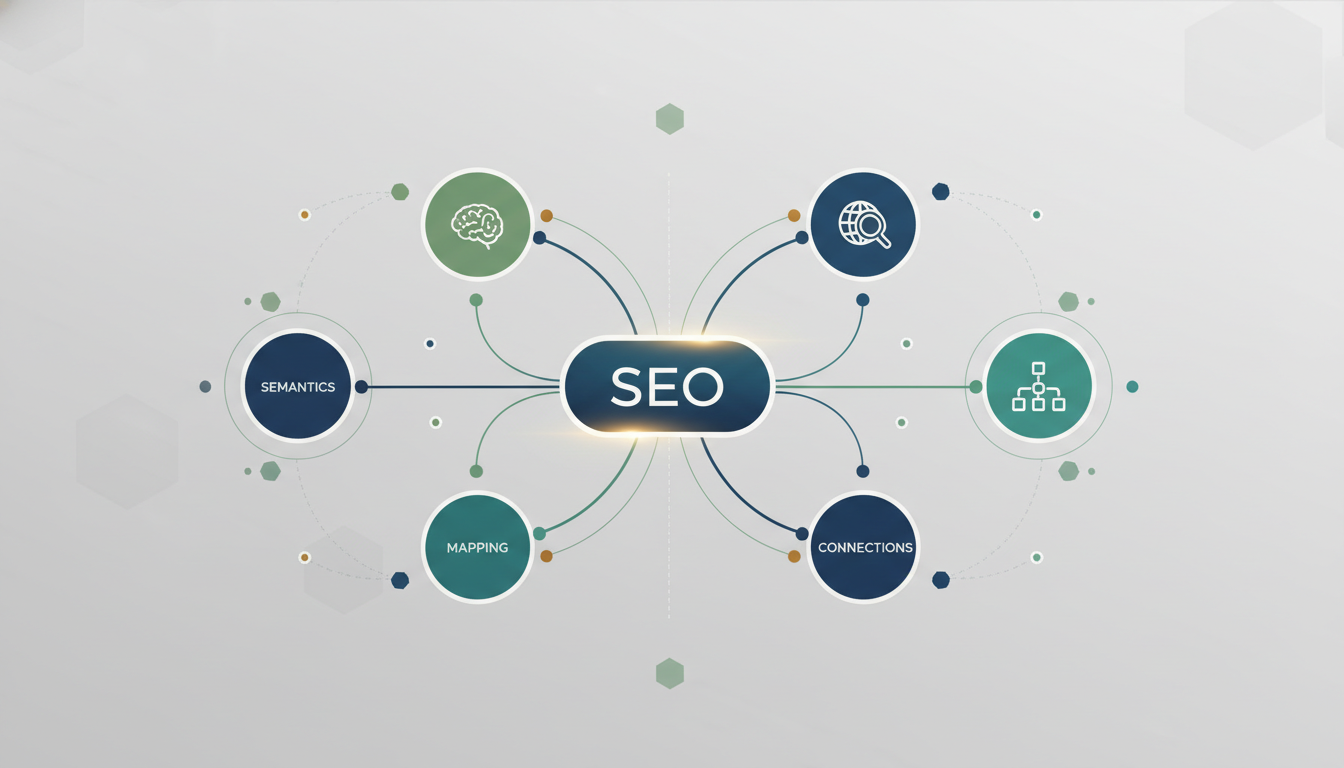
In the evolving landscape of modern search engines, the transition from “strings to things” has necessitated a fundamental shift in how we architect websites. Entity Relation Diagram (ERD) SEO is the advanced methodology of visualizing and structuring a website’s content based on entities and their inherent semantic relationships, rather than mere keyword distribution. Just as a database administrator uses an ERD to map the flow of data within a software system, a Semantic SEO architect uses ERDs to map the flow of relevance and authority across a domain.
Google’s Knowledge Graph relies on understanding the connections between distinct concepts (entities). An optimized ERD for SEO serves as the blueprint for establishing Topical Authority. It allows search algorithms to parse the website not as a collection of disjointed pages, but as a structured knowledge base where every node (page) supports and defines the others through explicit relationships. By mapping these connections, we bridge the gap between human understanding and machine readability, ensuring that the search engine can effectively index, rank, and present content for complex queries.
This comprehensive guide explores the strategic implementation of Entity Relation Diagrams in SEO, detailing how to map semantic connections to construct a domain that dominates its niche through superior information architecture and high entity-based SEO practices.
The Role of Entity Relation Diagrams in Semantic SEO
Defining the Semantic Nodes
At the core of an Entity Relation Diagram are the nodes, which represent the entities within a specific knowledge domain. In the context of Semantic SEO, an entity is any distinct, well-defined concept that can be identified by a Knowledge Base ID (such as a Wikipedia URL or a Google Knowledge Graph ID). Unlike keywords, which are ambiguous linguistic tokens, entities have specific attributes and context.
Creating an ERD starts with identifying the Central Entity of the website. For a digital marketing agency, the central entity might be “Search Engine Optimization.” From this central node, secondary entities branch out, such as “Technical SEO,” “Content Marketing,” and “Link Building.” Each of these nodes must be treated as a distinct object in the database of the website, requiring its own dedicated URL and semantic definition. This structured approach is the foundation of semantic SEO, moving beyond simple keyword matching to comprehensive topic coverage.
Mapping Attributes and Value Pairs
An entity is defined by its attributes. In an ERD, these attributes are the properties that describe the node. For example, the entity “Backlink” possesses attributes such as “Source URL,” “Target URL,” “Anchor Text,” and “Rel Attribute (Nofollow/Dofollow).” When mapping semantic connections, the SEO architect must ensure that the content covering an entity exhaustively addresses its attributes.
This “attribute-value” mapping ensures high Information Density. Search engines evaluate the quality of content by checking if the expected attributes of an entity are present. If a page covers “iPhone 15” but fails to mention attributes like “Battery Life,” “Screen Resolution,” or “A16 Bionic Chip,” the semantic relevance of that page is diminished. An ERD helps visualize these necessary attributes before content production begins, preventing information gaps.
Constructing the Topical Graph
From Diagrams to Topic Clusters
The visual representation of an ERD directly translates into the site’s topic clustering strategy. In semantic mapping, we group entities based on their Semantic Distance—the conceptual proximity between two topics. Entities that are closely related in the ERD should be physically close in the site structure, often linked via a parent-child relationship in the URL path or through immediate navigational proximity.
This clustering creates a “Semantic Silo.” By grouping the entity “On-Page SEO” with its related sub-entities like “Meta Tags,” “Header Optimization,” and “Image Alt Text,” we reinforce the topical relevance of the parent category. The ERD acts as the architectural plan, dictating that these pages must be interlinked to pass authority and context. This method allows the search engine to understand the depth of expertise the website possesses on a specific subject.
Designing the Internal Link Graph
The lines connecting nodes in an Entity Relation Diagram represent the relationships (or predicates) between entities. In web architecture, these relationships are materialized through hyperlinks. A robust internal linking structure is the physical manifestation of the ERD.
There are specific types of semantic relationships to map:
- Hierarchical (Is-A): “Technical SEO is a type of SEO.” This warrants a vertical link from parent to child.
- Associative (Has-A / Related-To): “Content Marketing relies on Keyword Research.” This warrants a horizontal link between siloed clusters.
- Sequential (Precedes/Follows): “Keyword Research precedes Content Writing.” This warrants a navigational link guiding the user journey.
By strictly adhering to the connections drawn in the ERD, we avoid “orphan pages” (nodes with no connections) and ensure that topical authority flows efficiently throughout the domain. Every internal link serves as a signal to Google about the relationship between two pieces of content.
Optimizing for Entity Salience and Context
Contextual Vectors and Neural Matching
Search engines use Neural Matching and Vector Space Models to interpret the context of a query. When an ERD is properly implemented, it optimizes the site for Entity Salience—the degree to which an entity is prominent and relevant within a specific text. By mapping the primary entity and its associated secondary entities, we can structure the content to maximize this salience.
For instance, on a page about “Coffee Beans,” merely mentioning the word “Arabica” once is insufficient. To establish high entity salience, the content must elaborate on the relationship between “Coffee Beans” and “Arabica,” perhaps contrasting it with “Robusta” and discussing “Roasting Profiles.” The ERD guides the writer to include these connections naturally, satisfying the semantic expectations of the search algorithms.
Bridging the Information Gap
One of the primary goals of Koray Tuğberk GÜBÜR’s framework is the elimination of Information Gaps. An Information Gap occurs when a website claims to be an authority on a topic but fails to cover a specific sub-topic or attribute that is semantically required by the consensus of the web. An ERD highlights these gaps visually. If the diagram for “Digital Marketing” lacks a node for “Email Automation,” the map is incomplete, and the site’s authority is compromised.
Systematically filling these gaps by creating content for every node in the ERD ensures that the website becomes a comprehensive source of truth. This completeness is a heavy ranking factor, as Google prefers to rank resources that satisfy the user’s entire journey without requiring them to return to the SERP.
Technical Implementation: Schema and Structured Data
While the ERD is a conceptual and architectural tool, its technical implementation relies heavily on Structured Data. Schema markup is the language we use to explicitly tell search engines about the entities and relationships defined in our diagram.
Using JSON-LD, we can define the @type of the entity (e.g., Article, Service, Organization) and use properties like about, mentions, and sameAs to link the page to the broader Knowledge Graph. For example, linking a page about “Python SEO” to the Wikipedia entry for the Python programming language using the sameAs property disambiguates the term and anchors the content in the global semantic web.
Effective use of schema markup validates the connections drawn in the ERD. It confirms to the crawler that the relationships implied by the internal links and content are factual and intentional, thereby solidifying the site’s structured data profile.
Advanced Methodology: The Source and Sink Model
In advanced Semantic SEO, we view the website as a directed graph consisting of Source Nodes and Sink Nodes.
- Source Nodes: These are high-authority, comprehensive pillar pages that introduce broad topics. They accumulate external backlinks and distribute authority (PageRank) outwards to specific sub-topics.
- Sink Nodes: These are highly specific pages (often long-tail questions or specific product attributes) that receive authority but generally do not link out extensively to unrelated topics. They capture specific search intents.
An effective ERD maps the flow from Source to Sink. It ensures that users and crawlers enter through broad queries and are guided effortlessly to specific answers. This flow minimizes the bounce rate and increases dwell time, as the semantic connections provide a natural path for further reading and discovery.
Frequently Asked Questions
What is the difference between an ERD and a Sitemap?
A sitemap is a simple list of URLs intended to help crawlers find pages. An Entity Relation Diagram (ERD) is a conceptual map of the meanings and relationships between the concepts on those pages. While a sitemap is technical, an ERD is semantic. The ERD dictates the internal linking strategy and content hierarchy, which may eventually be reflected in the sitemap structure.
How does an ERD impact Keyword Research?
ERD shifts the focus from keyword volume to entity coverage. Instead of chasing high-volume keywords, an ERD-based approach identifies all necessary concepts required to define a topic comprehensively. This leads to better keyword mapping because the content is structured around distinct objects and their attributes, naturally capturing thousands of long-tail variations and semantically related queries.
Can I use ERD tools for database design in SEO?
Yes, standard database modeling tools like Lucidchart, draw.io, or specialized ontology editors like Protégé can be used for SEO. The goal is to visualize the “Subject-Predicate-Object” triples. For example, mapping “Page A (Subject) – Links To (Predicate) – Page B (Object)” helps visualize the link graph before building it.
How does Google use Entity Relations in ranking?
Google uses its Knowledge Graph to verify the accuracy and depth of content. If your website’s internal structure mirrors the established relationships in Google’s Knowledge Graph (e.g., linking “Steve Jobs” to “Apple”), it signals trust and expertise. Strong entity relations help Google understand what a page is about without relying solely on exact match keywords.
What is the first step in creating an SEO ERD?
The first step is identifying your “Seed Entity.” This is the primary topic your website focuses on. From there, you must list all associated attributes, sub-topics, and related entities. Using Wikipedia and Google’s “People Also Ask” features can help identify the entities that search engines already associate with your seed topic.
Conclusion
Mastering Entity Relation Diagram SEO is the hallmark of a world-class Semantic SEO strategy. It moves website optimization from a reactive game of keyword insertion to a proactive architectural discipline. By mapping semantic connections, defining clear attributes, and structuring content to mirror the logic of the Knowledge Graph, SEOs can build websites that possess undeniable Topical Authority.
The future of search is not in strings, but in things. The websites that thrive will be those that present a clear, interconnected, and comprehensive map of entities to the search engines. Through rigorous planning, visual mapping, and the application of Koray Tuğberk GÜBÜR’s frameworks, you can ensure your digital assets are not just indexed, but understood and prioritized by modern algorithms.
