
Introduction
In the vast, ever-expanding digital ecosystem, creating content is merely the first step. The true challenge—and the ultimate driver of business growth—lies in ensuring that your content actually reaches the eyes of your intended audience. This brings us to the critical question of how to optimize website content for SEO. It is no longer enough to simply stuff keywords into a blog post and hope for the best. Modern Search Engine Optimization (SEO) is a sophisticated blend of art and science, requiring a deep understanding of user psychology, technical precision, and authoritative storytelling.
As an expert SEO content strategist, I have witnessed firsthand how a well-executed content optimization strategy can transform a stagnant website into a lead-generating powerhouse. Whether you are a business owner looking to scale or a marketing manager aiming to dominate the SERPs (Search Engine Results Pages), understanding the nuances of optimization is non-negotiable. It involves a holistic approach that connects the dots between what your audience is searching for and how search engine algorithms interpret quality.
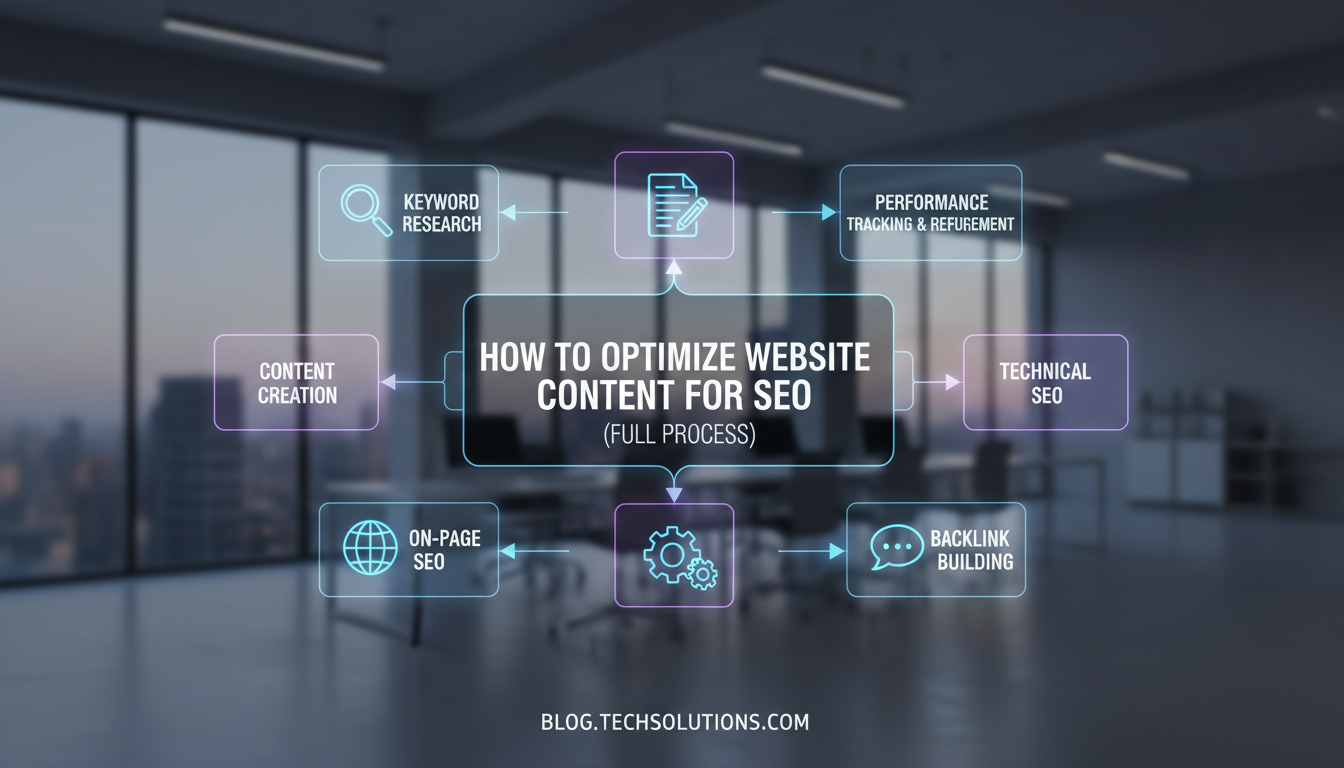
This comprehensive guide will walk you through the full process of optimizing your website content. From the initial stages of intent-based keyword research to the technical intricacies that underpin visibility, we will cover every essential element. We will also explore how leveraging professional SEO services can accelerate your results. By the end of this article, you will possess a robust framework for crafting content that not only ranks high but also converts visitors into loyal customers.
The Foundation: Intent-Based Keyword Research
Before writing a single word, you must understand the ‘why’ behind the search. Keyword research has evolved significantly; it is no longer just about search volume. Today, Google prioritizes user intent—the specific goal a user has in mind when typing a query.
Identifying the Four Types of Intent
To truly understand how to optimize website content for SEO, you must categorize your keywords into four distinct buckets:
- Informational: The user is looking for an answer to a specific question (e.g., “what is seo optimization”).
- Navigational: The user is trying to reach a specific site (e.g., “Saad Raza" data-wpil-keyword-link="linked" data-wpil-monitor-id="69">Saad Raza SEO login”).
- Transactional: The user is ready to buy (e.g., “hire seo expert”).
- Commercial Investigation: The user is comparing options before buying (e.g., “best seo services in Pakistan”).
Using tools like Semrush or Ahrefs helps uncover these keywords, but your analysis must go deeper. You need to look at the current top-ranking pages for your target terms. Are they long-form guides, product pages, or listicles? Aligning your content format with user expectations is half the battle won.
Long-Tail Keywords and Semantic Search
While head terms (short, generic keywords) have high volume, they are often fiercely competitive and vague in intent. Long-tail keywords—specific phrases containing three or more words—often convert better because the user is further down the sales funnel. Furthermore, modern SEO relies heavily on semantic search. This means including related terms and concepts (LSI keywords) that help search engines understand the context of your topic.
Mastering On-Page SEO Elements
Once you have your keywords, the next phase is integrating them naturally into the structural elements of your page. This is the realm of on-page SEO, which focuses on optimizing individual web pages to rank higher and earn more relevant traffic.
Crafting Irresistible Title Tags and Meta Descriptions
Your title tag is arguably the most important on-page ranking factor. It acts as the headline of your search result. It must be compelling, include your primary keyword near the beginning, and remain under 60 characters to avoid truncation. Similarly, while meta descriptions do not directly impact rankings, they drastically affect your Click-Through Rate (CTR). A well-written meta description acts as an elevator pitch, convincing users that your page holds the answer they seek.
Strategic Header Hierarchy (H1, H2, H3)
Search engines crawl content by reading headers to understand the structure and hierarchy of information. Your H1 tag should be the main title of the page and include the primary keyword. Subsequent H2s and H3s should break down the content into logical sections. This not only helps Google bots index your site but also improves the reading experience for humans. A wall of text is a surefire way to increase your bounce rate, signaling to Google that your content is not engaging.
URL Structure and Permalinks
Clean, descriptive URLs are essential. Avoid strings of random numbers or dates. Instead, use a structure that reflects the content of the page, such as yourdomain.com/blog/how-to-optimize-content. This provides a clear signal to both users and search engines about the page’s topic.
Writing for Humans, Optimizing for Bots
There is a delicate balance between writing for an algorithm and writing for a human reader. The “content is king” mantra remains true, but context is the queen. To truly master how to optimize website content for SEO, you must produce high-quality, authoritative content that provides genuine value.
Readability and Engagement
Complex jargon and convoluted sentence structures can alienate readers. Tools like the Hemingway Editor can help you maintain a high readability score. Use short paragraphs, bullet points, and bold text to make your content skimmable. Remember, most users scan content before they decide to read it in depth. If they cannot find the information they need quickly, they will navigate away.
Content Depth and E-E-A-T
Google’s E-E-A-T guidelines (Experience, Expertise, Authoritativeness, and Trustworthiness) are crucial for ranking, especially in YMYL (Your Money or Your Life) niches. Your content should demonstrate deep knowledge of the subject. Don’t just scratch the surface; provide comprehensive answers, data-backed insights, and actionable advice. This is where reviewing successful case studies can be incredibly beneficial. Seeing how strategies are applied in real-world scenarios builds trust with your audience and proves your expertise.
According to Google’s Search Quality Evaluator Guidelines, the quality of the main content is a primary factor in page rating. This means original reporting, insightful analysis, and substantial effort are rewarded.
Technical SEO: The Backbone of Content Performance
Even the most beautifully written article will fail if the underlying technical foundation of the website is flawed. Technical SEO ensures that search engines can crawl, index, and render your pages effectively.
Core Web Vitals and Page Speed
Google has made it clear that page experience is a ranking factor. Core Web Vitals measure the speed, responsiveness, and visual stability of a page. Slow-loading pages frustrate users and lead to high abandonment rates. Optimizing image sizes, leveraging browser caching, and minimizing JavaScript execution are vital steps in improving your technical score.
Mobile-Friendliness
With the majority of web traffic now coming from mobile devices, Google operates on a mobile-first indexing basis. This means it predominantly uses the mobile version of the content for indexing and ranking. Ensuring your site is fully responsive and offers a seamless experience on smartphones and tablets is critical. You can check your site’s mobile performance using Google’s Mobile-Friendly Test.
Internal Linking Structure
Internal links connect your content and help distribute page authority (link juice) throughout your site. When you write a new piece of content, identify opportunities to link back to relevant service pages or other blog posts. For instance, if you are discussing the importance of backlinks, you should naturally link to your off-page SEO guide. This not only helps with crawling but also keeps users on your site longer, reducing bounce rates.
Visual Content Optimization
Images, videos, and infographics significantly enhance user engagement, but they can also drag down your site’s performance if not optimized. Search engines cannot “see” images like humans do; they rely on metadata to understand what the visual content represents.
Alt Text and File Names
Always rename your image files to something descriptive before uploading them (e.g., “seo-content-optimization-process.jpg” instead of “IMG_1234.jpg”). Furthermore, always fill out the Alt Text field. This text describes the image to search engine bots and is used by screen readers for visually impaired users, improving your site’s accessibility.
Video Integration
Video content is exploding in popularity. Embedding relevant videos can increase the time users spend on your page (Dwell Time), which is a positive signal to search engines. However, ensure videos are lazy-loaded so they do not impede the initial page load speed.
The Role of Authority and Off-Page Signals
While this guide focuses on how to optimize website content for SEO on the page itself, you cannot ignore the influence of external factors. Building authority is a long-term game that involves acquiring high-quality backlinks from reputable sources within your industry.
Creating “linkable assets”—such as definitive guides, original research, or free tools—encourages other websites to cite your content. This validation from third parties signals to Google that your website is a trusted source of information. If you are struggling to build this authority organically, consulting with a specialist in Islamabad, Lahore, or Karachi can provide localized strategies to boost your domain rating.
Monitoring, Analysis, and Content Updates
SEO is not a “set it and forget it” task. The digital landscape changes rapidly, and content that ranks number one today might drop to page two next month due to “content decay.” Regular auditing is essential.
Using Google Search Console and Analytics
Google Search Console is an indispensable tool for monitoring your site’s health. It alerts you to crawling errors, shows you which queries are driving traffic, and highlights click-through rates. Google Analytics provides deeper insights into user behavior, such as how long they stay on a page and where they drop off.
Refreshing Old Content
One of the most effective SEO strategies is updating older content. If you have a post from two years ago that used to drive traffic but has since declined, refresh it with new information, current year statistics, and updated internal links. This “freshness” factor can often result in a quick rankings boost.
Why Professional Expertise Matters
Implementing all these strategies requires time, patience, and a high level of technical skill. For many businesses, the learning curve is too steep to navigate while trying to run day-to-day operations. This is where partnering with a dedicated expert becomes invaluable.
Whether you need a full site audit or a long-term content strategy, working with a professional can save you months of trial and error. You can learn more about the team behind successful campaigns at our About page or reach out directly via the Contact page to discuss your specific needs. Understanding the intricate details of SEO is what separates thriving online businesses from those that remain invisible.
According to Search Engine Land’s Guide to SEO, successful SEO requires a commitment to continuous learning and adaptation. By following the comprehensive process outlined above, you are laying the groundwork for sustainable digital success.
Frequently Asked Questions
1. How long does it take to see results from content optimization?
SEO is a long-term strategy. typically, it takes 3 to 6 months to see significant movement in rankings for a new page. However, updating existing high-authority content can sometimes yield results in a few weeks. Consistency and quality are key factors in this timeline.
2. Is word count a ranking factor?
Word count itself is not a direct ranking factor. However, longer content (typically 1,500+ words) tends to rank better because it covers the topic more thoroughly, keeps users on the page longer, and provides more opportunities for keyword inclusion and backlinking.
3. What is the difference between On-Page and Off-Page SEO?
On-Page SEO refers to actions taken directly on your website, such as content creation, keyword optimization, and technical fixes. Off-Page SEO involves activities outside your website to build authority, primarily through link building and social media engagement.
4. How often should I update my website content?
It is best practice to audit your content at least every 6 to 12 months. However, for fast-moving industries (like technology or finance), you may need to update content quarterly to ensure accuracy and relevance.
5. Can I optimize my website myself, or do I need an expert?
You can certainly learn the basics and implement fundamental changes yourself. However, for competitive keywords and technical issues, hiring an expert ensures a more advanced, error-free strategy that yields better ROI in the long run.
Conclusion
Mastering how to optimize website content for SEO is a journey of continuous improvement. It requires a synergy between creative writing, technical maintenance, and strategic analysis. By conducting thorough keyword research, adhering to on-page best practices, ensuring technical health, and building authority, you position your website to dominate search results.
Remember, the goal is not just to please the search engine bots but to provide an exceptional experience for your human visitors. When you prioritize value and usability, higher rankings inevitably follow. If you are ready to take your digital presence to the next level but need guidance on executing these strategies, do not hesitate to explore our pricing packages or read more about our methodologies. Start optimizing today, and watch your organic traffic soar.

Saad Raza is one of the Top SEO Experts in Pakistan, helping businesses grow through data-driven strategies, technical optimization, and smart content planning. He focuses on improving rankings, boosting organic traffic, and delivering measurable digital results.