
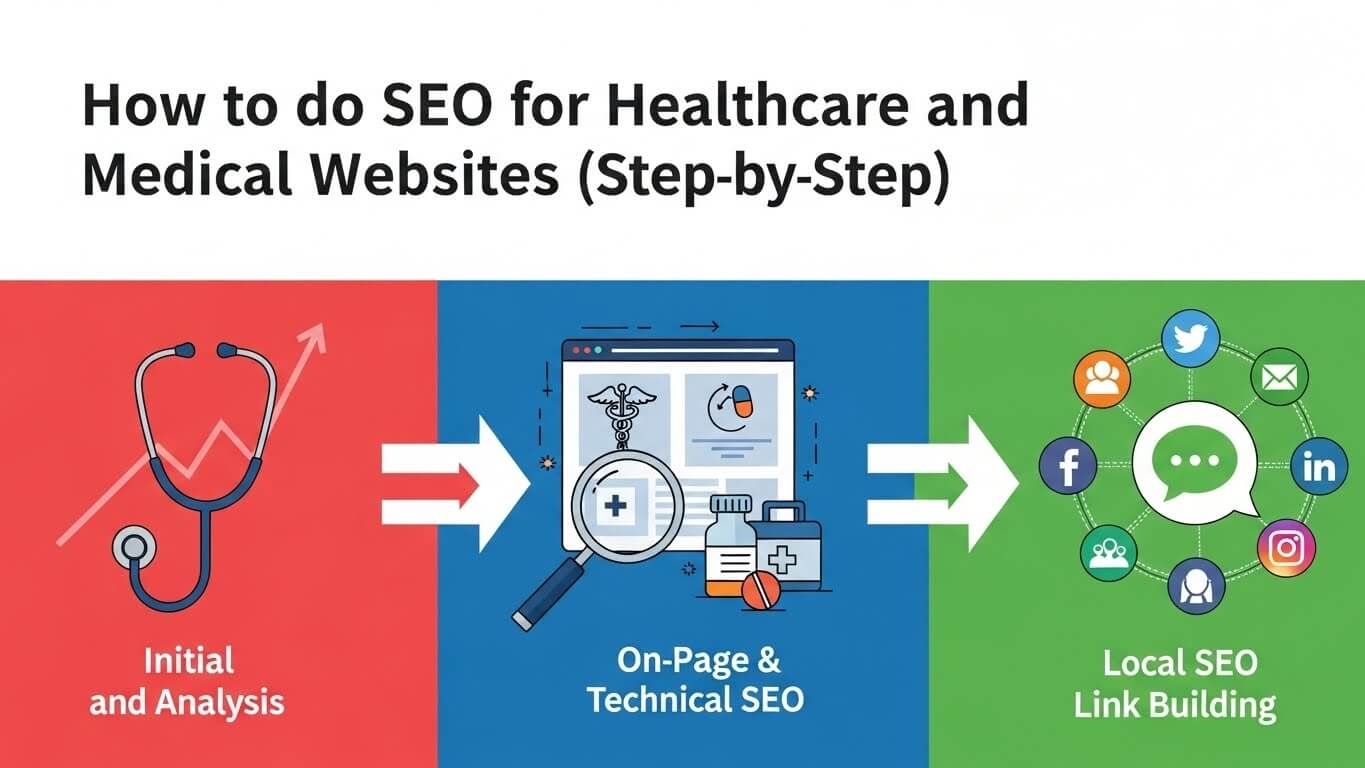
SEO for healthcare and medical websites is essential for attracting patients, improving local visibility, building trust, and ranking high for medical services. Because healthcare content falls under Google’s YMYL (Your Money Your Life) category, the SEO process requires high accuracy, authority, and trust signals supported by strong E-E-A-T factors, medically reviewed content, and high-quality patient-focused information. Effective healthcare SEO focuses on technical optimization, local SEO for clinics and hospitals, medical keyword research, service page optimization, schema markup, on-page SEO, speed optimization, secure HTTPS, mobile friendliness, and a strong user experience that guides patients toward appointment bookings. Optimizing treatment pages, doctor profiles, and condition-specific content helps search engines understand medical expertise while medical backlinks, authoritative citations, and reputation management strengthen trust. Understanding essential SEO tasks such as crawlability improvements, internal linking, metadata optimization, Core Web Vitals, healthcare directory listings, and structured data is key to building long-term organic visibility. These strategies also align with expert guidance such as “How can an SEO consultant help to increase organic traffic on a website?” because an SEO consultant can analyze performance, fix technical issues, improve content quality, align search intent, and implement targeted strategies that significantly boost organic traffic for healthcare providers. This complete approach ensures healthcare websites rank higher, attract qualified patients, and maintain credibility in competitive medical search results.
1. Optimize for Medical Search Intent
Healthcare users search differently. They want trustworthy, accurate, and easy-to-understand information. Your pages must match specific search intents such as symptoms, treatments, costs, appointment booking, or doctor availability. Align each page with the right intent by using clear explanations, simple wording, medically reviewed information, FAQs, and structured content. Search engines reward accurate and intent-matching medical content.
2. Strengthen E-E-A-T for Medical Trustworthiness
Healthcare sites must demonstrate expertise, experience, authority, and trust. To improve E-E-A-T, add doctor/physician bios with credentials, include certifications and medical affiliations, show awards, display reviews and patient testimonials, add author names to content, use medical reviewers for articles, and include HIPAA-compliant patient information policies. These trust signals help your medical pages rank higher for sensitive health-related queries.
3. Perform Healthcare Keyword Research
Healthcare SEO requires targeting keywords patients actually search. Focus on service-based terms (neurologist near me, dental implants cost, physiotherapy clinic), condition-based keywords (knee pain treatment, sinus infection symptoms), treatment keywords (root canal procedure, laser eye surgery benefits), and local keywords (cardiologist in Lahore, pediatrician near me). Use long-tail keywords because healthcare users often search specific questions or symptoms.
4. Optimize On-Page SEO for Medical Pages
Every medical service page should have a clear H1, optimized meta title, meta description, structured headings, keyword placement, internal linking, and patient-friendly content. Add procedure details, benefits, risks, FAQs, pricing guidelines (if applicable), and appointment options. Also optimize image alt tags, embed videos, and ensure your URLs are short and service-focused. Well-optimized pages build credibility and improve rankings.
5. Focus Strongly on Local SEO
Most patients search for healthcare providers within their area. To improve local SEO: optimize your Google Business Profile, ensure consistent NAP (Name, Address, Phone), add local keywords to your pages, create location-specific service pages, add patient reviews, upload clinic photos, list your practice in medical directories, and add schema markup for local businesses. Reviews play a major role in medical rankings, so encourage satisfied patients to leave feedback.
6. Improve Website Speed and Mobile Experience
Medical websites must load fast and work flawlessly on mobile devices. Patients often check clinics on their phones. Improve speed by compressing images, using caching, eliminating heavy plugins, and improving hosting performance. Ensure buttons like “Book Appointment” are visible and easy to click. A quick, smooth mobile experience reduces bounce rates and increases patient conversions.
7. Add Medical Schema Markup
Schema markup helps search engines understand your healthcare services. Use LocalBusiness, MedicalOrganization, Physician, FAQ schema, Review schema, and MedicalCondition schema where applicable. Schema improves visibility in search results and increases click-through rates for medical websites.
8. Create High-Quality Medical Content
Content is essential for healthcare SEO. Create educational blog posts, service pages, FAQs, symptom guides, treatment explanations, recovery tips, health awareness articles, and prevention advice. All medical content should be easy to read, medically accurate, written or reviewed by professionals, and updated regularly. Avoid clickbait or unverified claims. High-quality content builds authority and ranks well in YMYL categories.
9. Build Authoritative Backlinks
Healthcare websites must earn backlinks from trustworthy sources. Useful strategies include collaborating with medical associations, submitting to hospital directories, writing guest posts for health magazines, publishing research, partnering with local clinics, earning press mentions, and creating shareable medical content. Authoritative backlinks boost domain authority and long-term ranking stability.
10. Optimize Appointment and Conversion Paths
SEO brings traffic, but conversion optimization turns visitors into patients. Add CTA buttons like “Book Appointment,” “Call Now,” or “Visit Clinic Today.” Make appointment forms simple, include live chat, provide WhatsApp contact options, and show insurance information. A smooth conversion funnel increases patient bookings.
11. Ensure Full HIPAA and Health Information Compliance
Your SEO strategy must follow privacy and safety rules. Avoid storing sensitive patient data without security. Use HTTPS, secure forms, encrypted storage, and compliant plugins. Trust and compliance improve both user confidence and search visibility.
12. Monitor Analytics and Improve Continuously
Use Google Analytics and Search Console to track performance, fix errors, check indexing, improve CTR, monitor keyword rankings, and optimize pages. SEO for healthcare requires consistent improvements because medical search trends evolve quickly.
Conclusion
Healthcare and medical SEO require strong trust signals, accurate content, optimized service pages, local SEO, high-quality backlinks, and constant technical and content improvements. By focusing on E-E-A-T, medical keyword targeting, schema, speed optimization, mobile usability, and patient experience, healthcare websites can rank higher, attract more qualified patients, and build long-term medical authority.

Saad Raza is one of the Top SEO Experts in Pakistan, helping businesses grow through data-driven strategies, technical optimization, and smart content planning. He focuses on improving rankings, boosting organic traffic, and delivering measurable digital results.